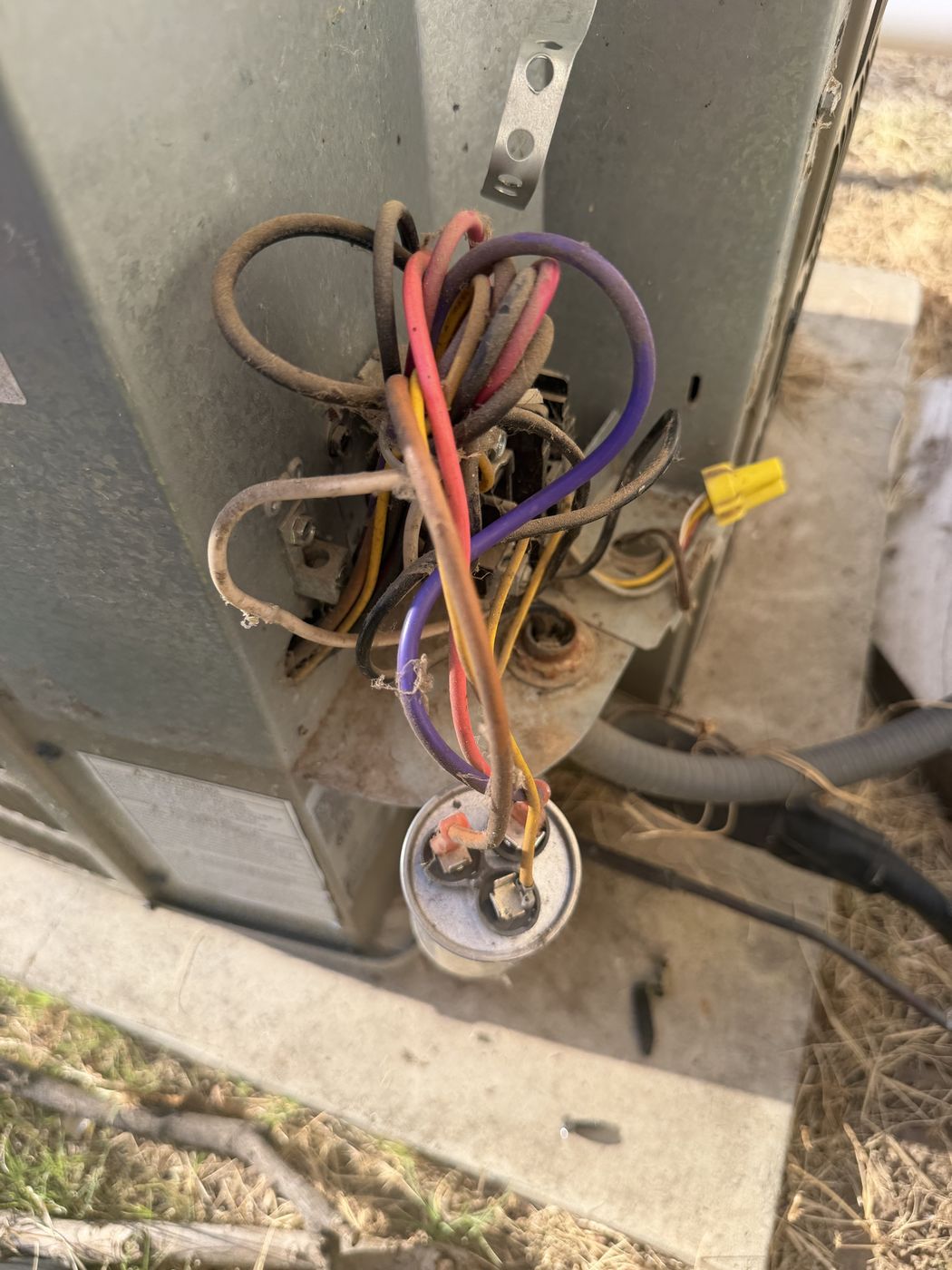
Labor Day, 106 degrees, and my parents' AC quit. Dad called asking for the number of an AC guy. I asked him to give me an hour first.
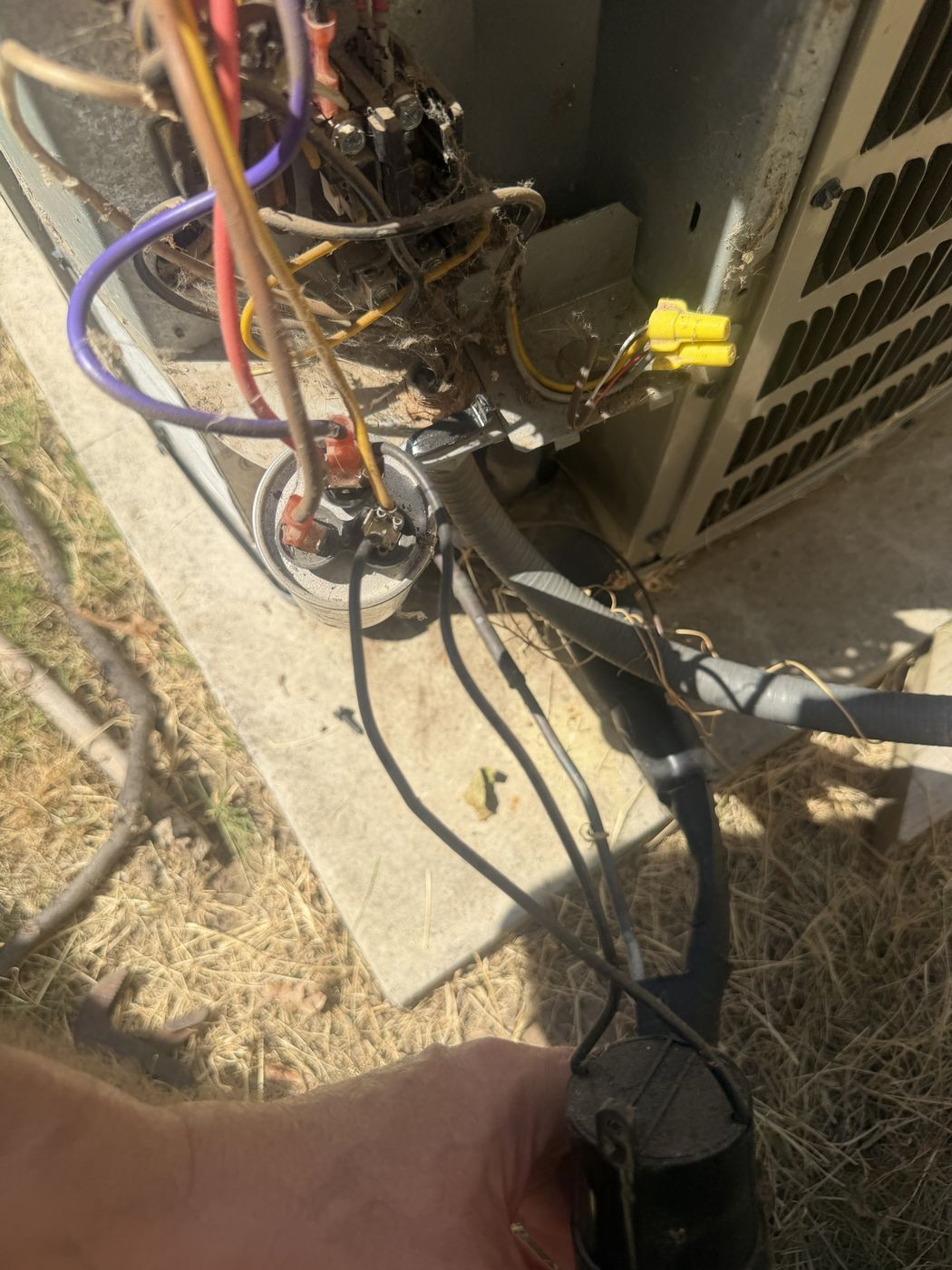
Here is what I found. Take pictures of everything before you pull a single wire. Take more than you think you need. That phone photo is worth more than any diagram when you are sweating and squinting.
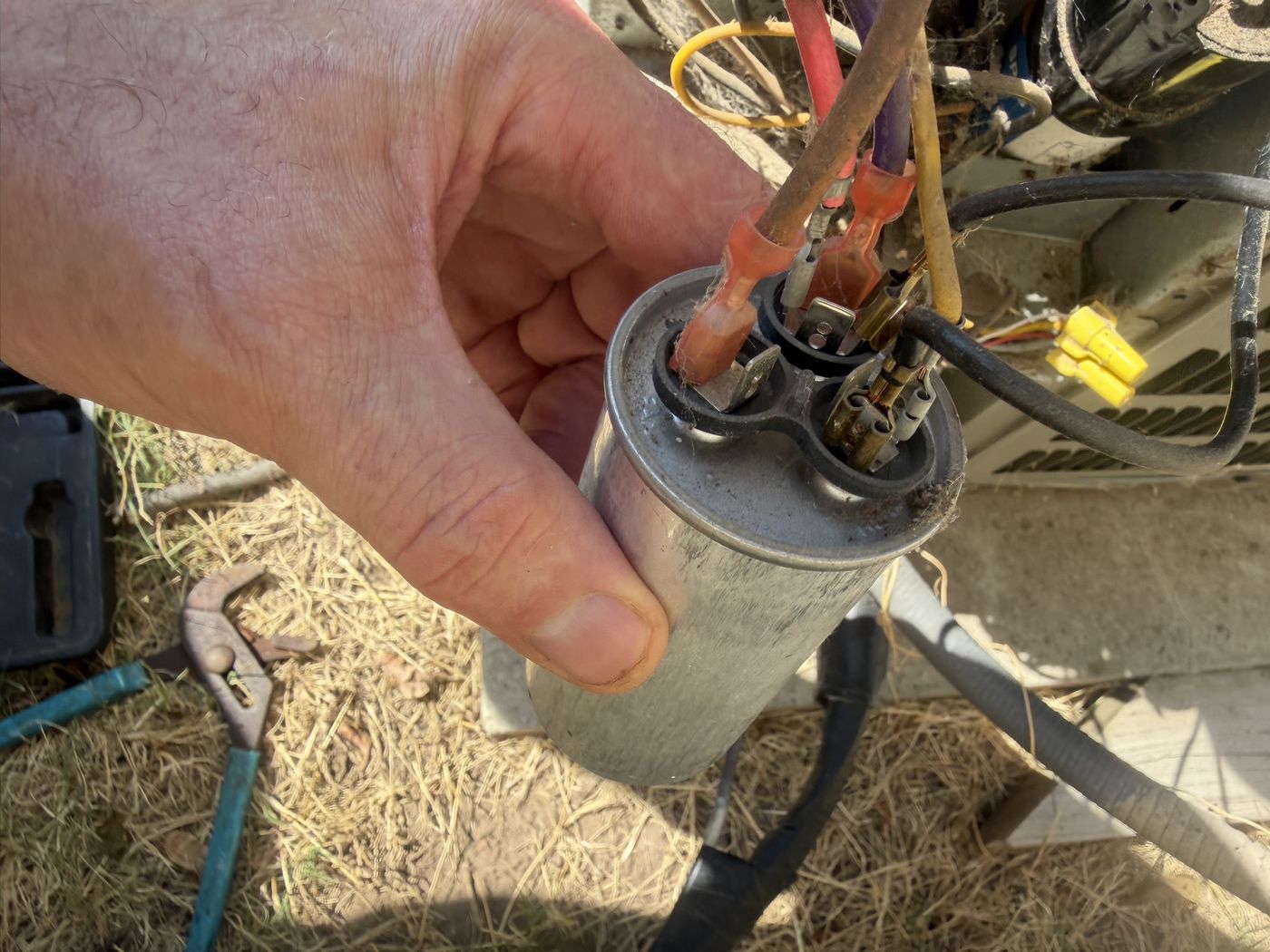
The top of the capacitor
One can, two capacitors inside. They share the C post and that is why a single part runs both motors.
This is the part that scares people off, and it should not. C is common, FAN is the fan, HERM is the compressor. That is it.
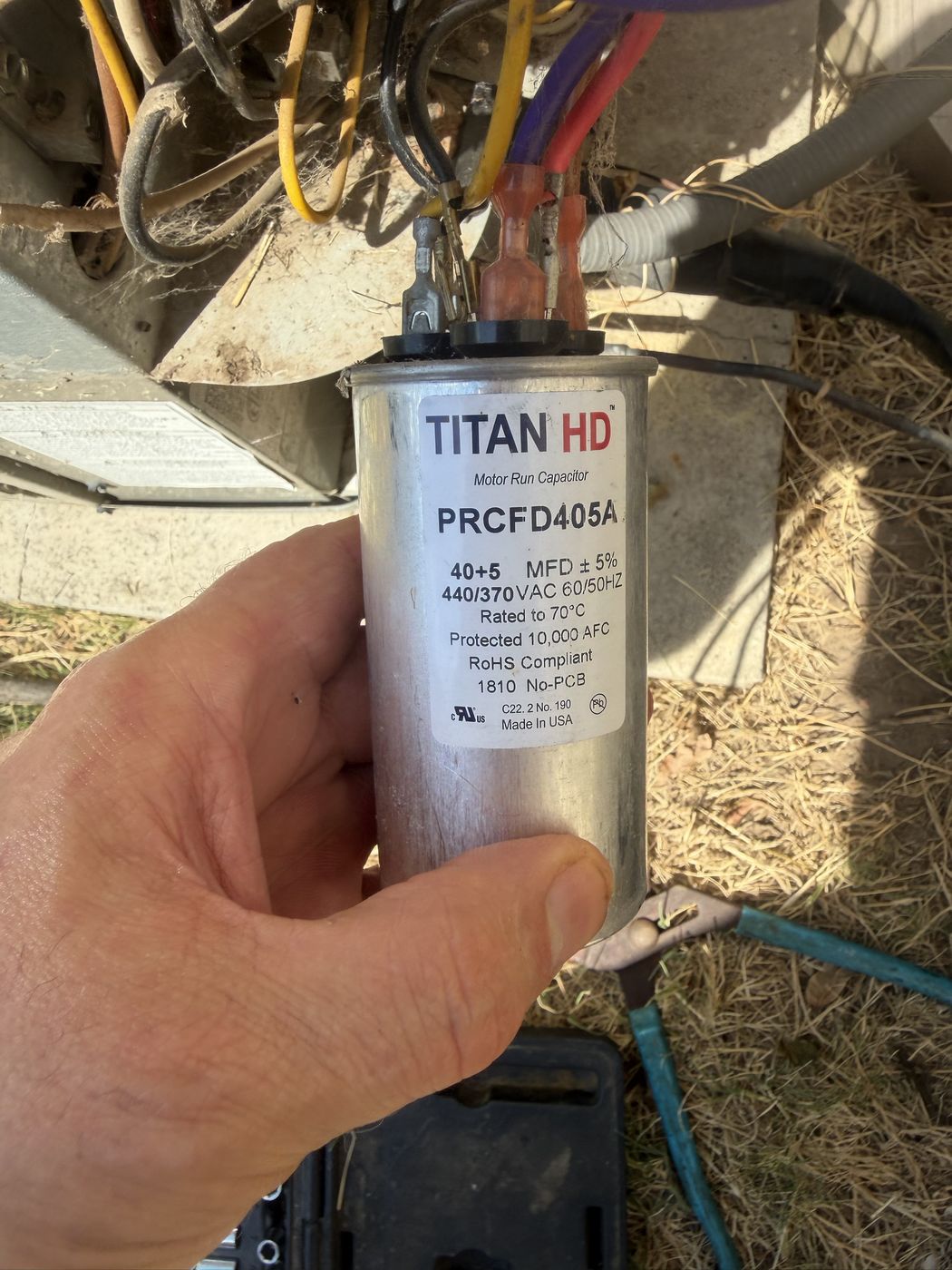
The 40 feeds the compressor. The 5 feeds the fan. Everything else on that label is noise.
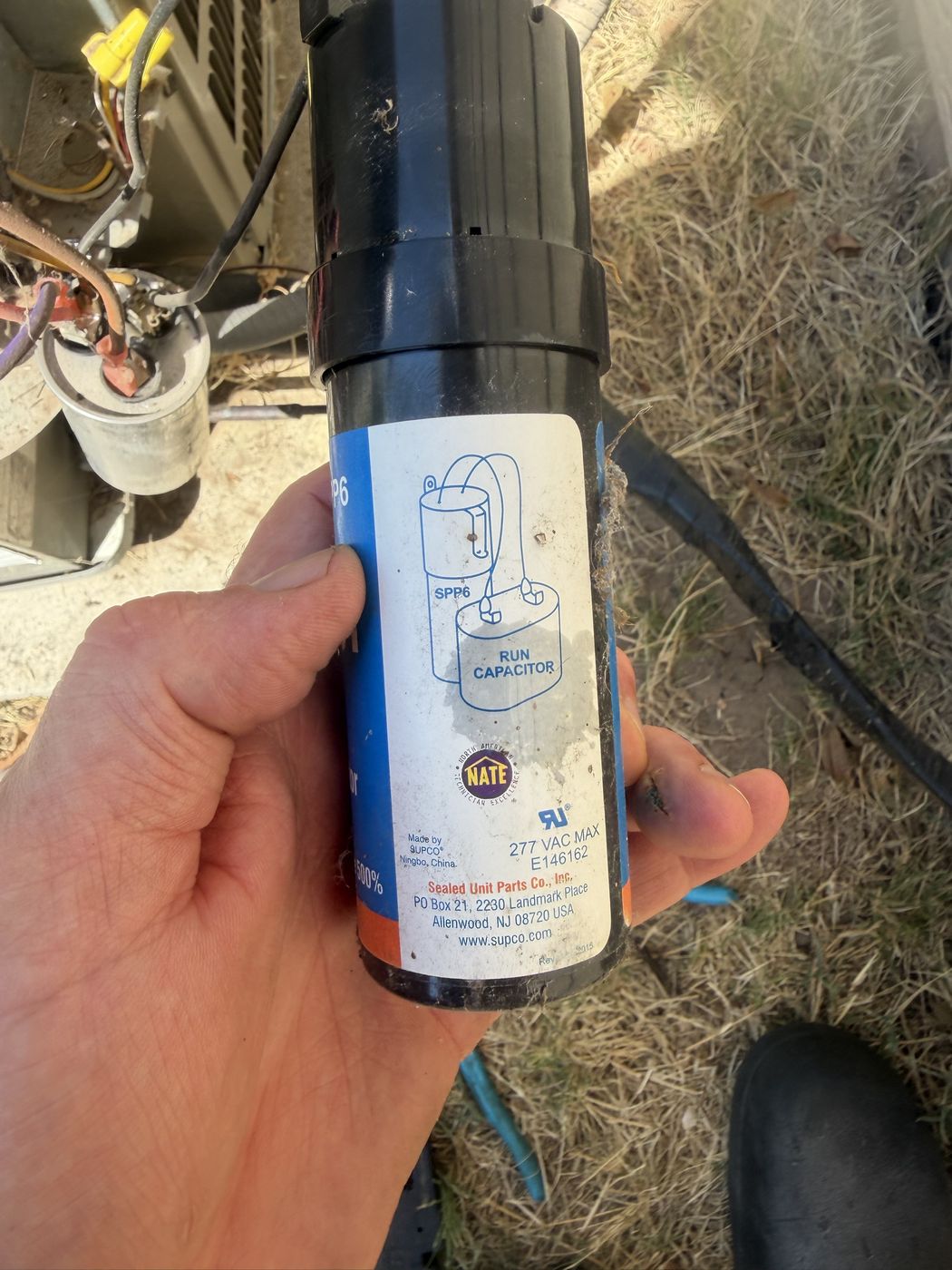
Home Depot had one, but it was the wrong size for this compressor, so it would have been the wrong part anyway. It is almost always the capacitor that dies, not the hard start, so I reused the original.
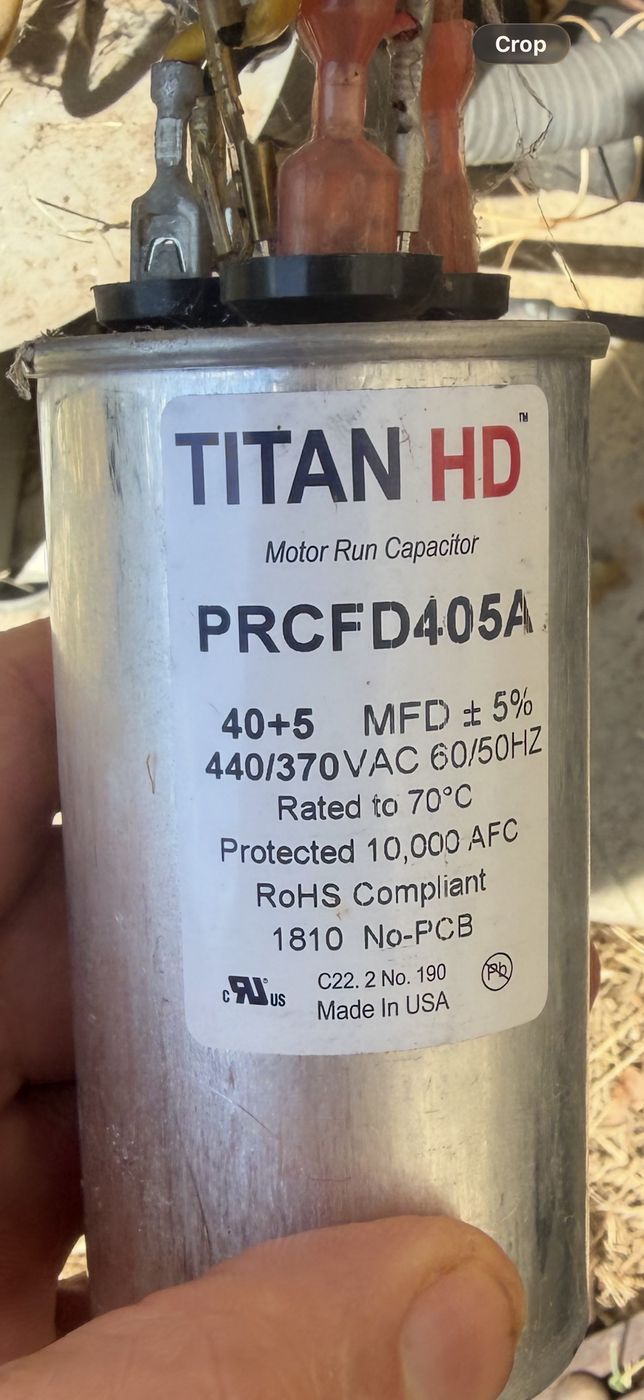
If you show up at the counter with a photo of the label, you cannot buy the wrong thing.
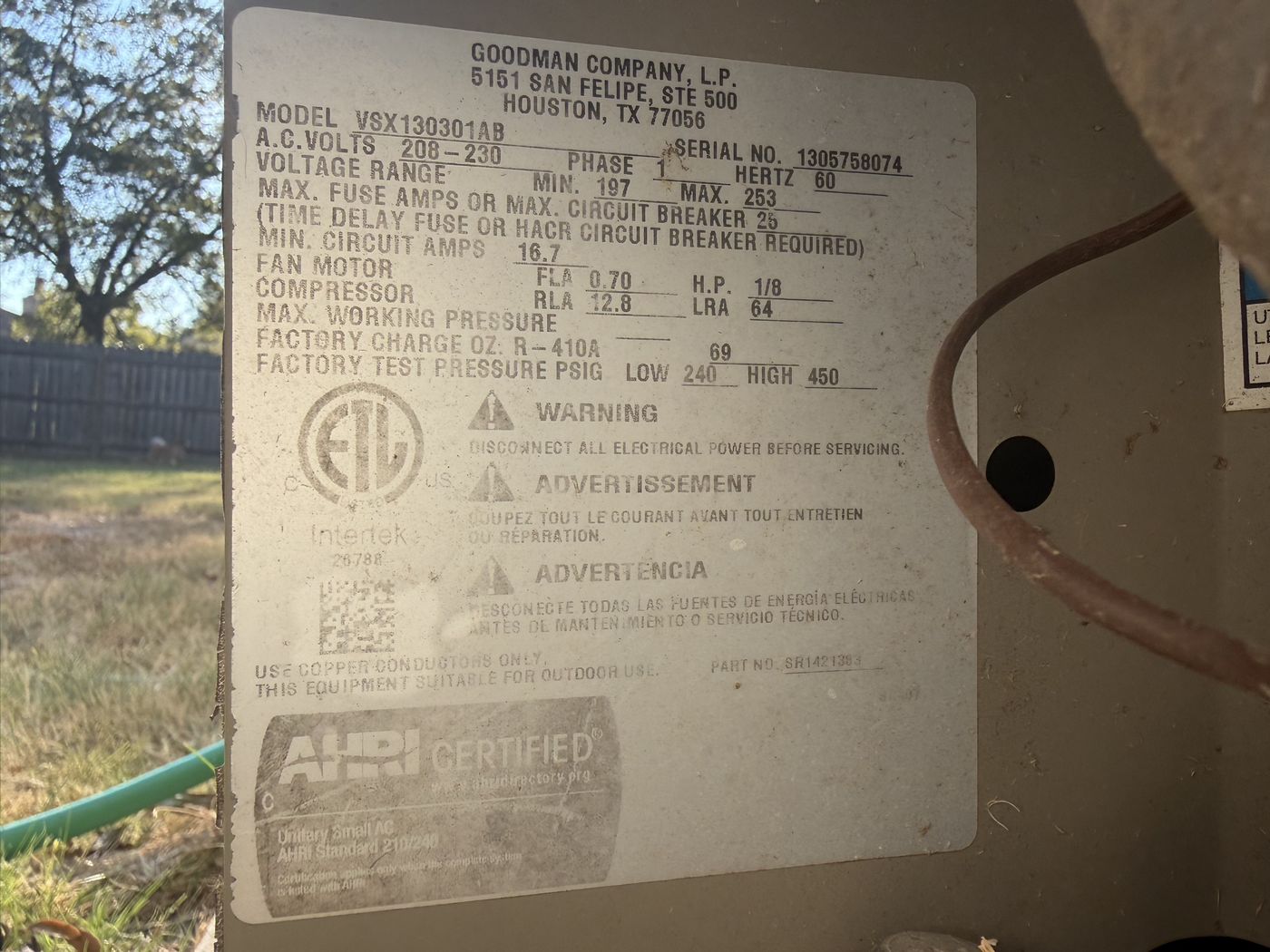
Costs you two seconds and saves you a phone call later.

My usual place downtown was closed for the holiday, so Home Depot it was. The shelf was full except for three sizes, and mine was one of the three missing. The employee told me five other people had come in for that exact one that day, and that those are the most popular sizes so they are almost always sold out. He checked the west side store. Nothing.
So five people walked out of there with no part, no answer, and a house full of hot kids. And the shelf they were standing in front of had everything they needed.
This is more common than I realized. While I was writing this up, I mentioned it to a woman I sit near at work, and she and her husband had gone through the exact same thing the day before. Heat like this is what kills these units, and when it hits, it hits everybody at once. That is why the popular sizes are the ones that are gone.
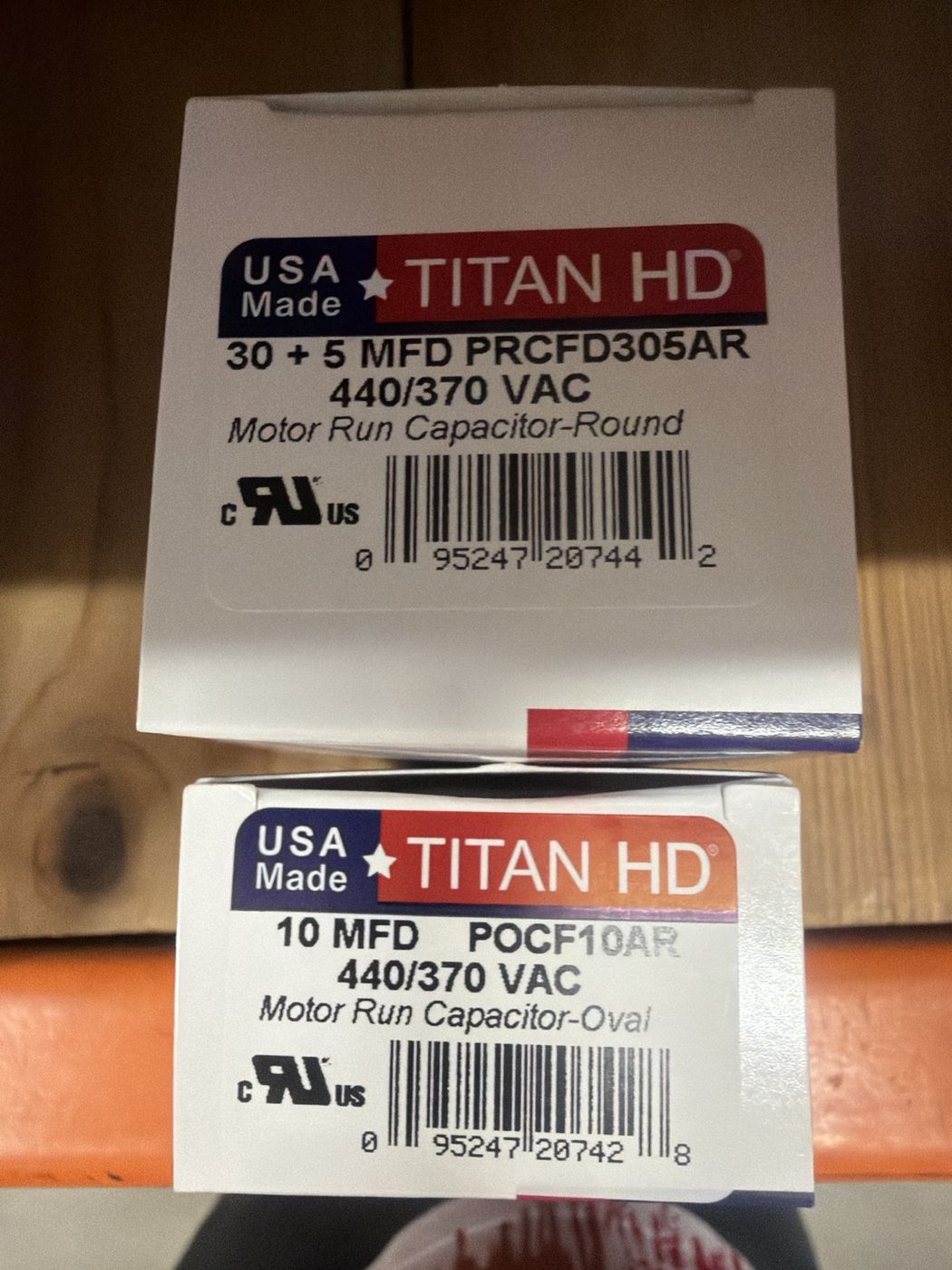
Capacitors wired in parallel add up. 30 plus 10 equals 40. Two parts on the shelf make the one part that is not.
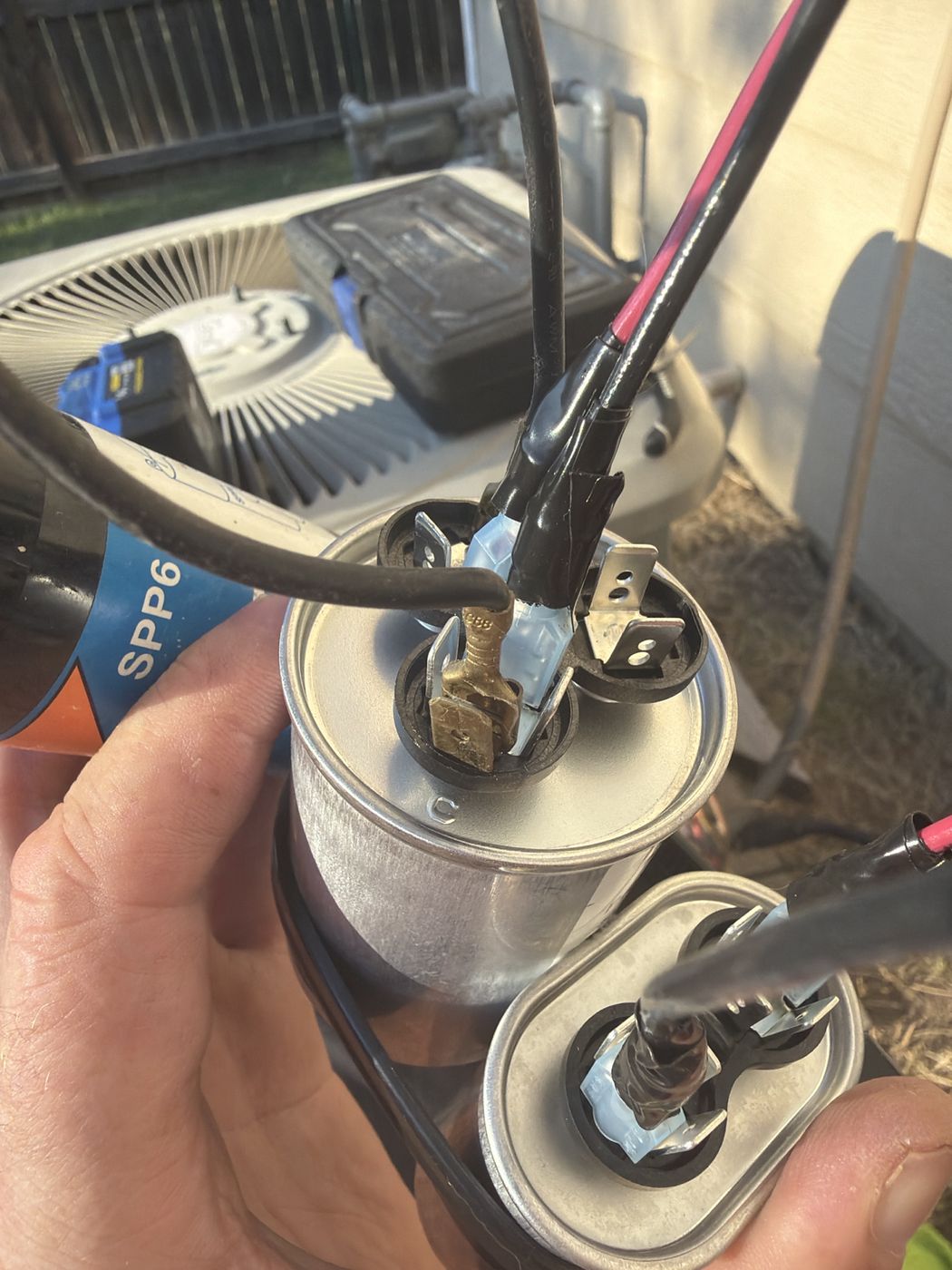
How the 30 becomes a 40
The red wire leaves HERM and passes over the top of the can. It does not touch FAN, and it must not: the fan side is already a 5 and stays a 5. The little 10 MFD has no polarity, so either leg can go either way. One lands on HERM, the other on C.
That is the whole trick. The 5 for the fan is already there and does not get touched.
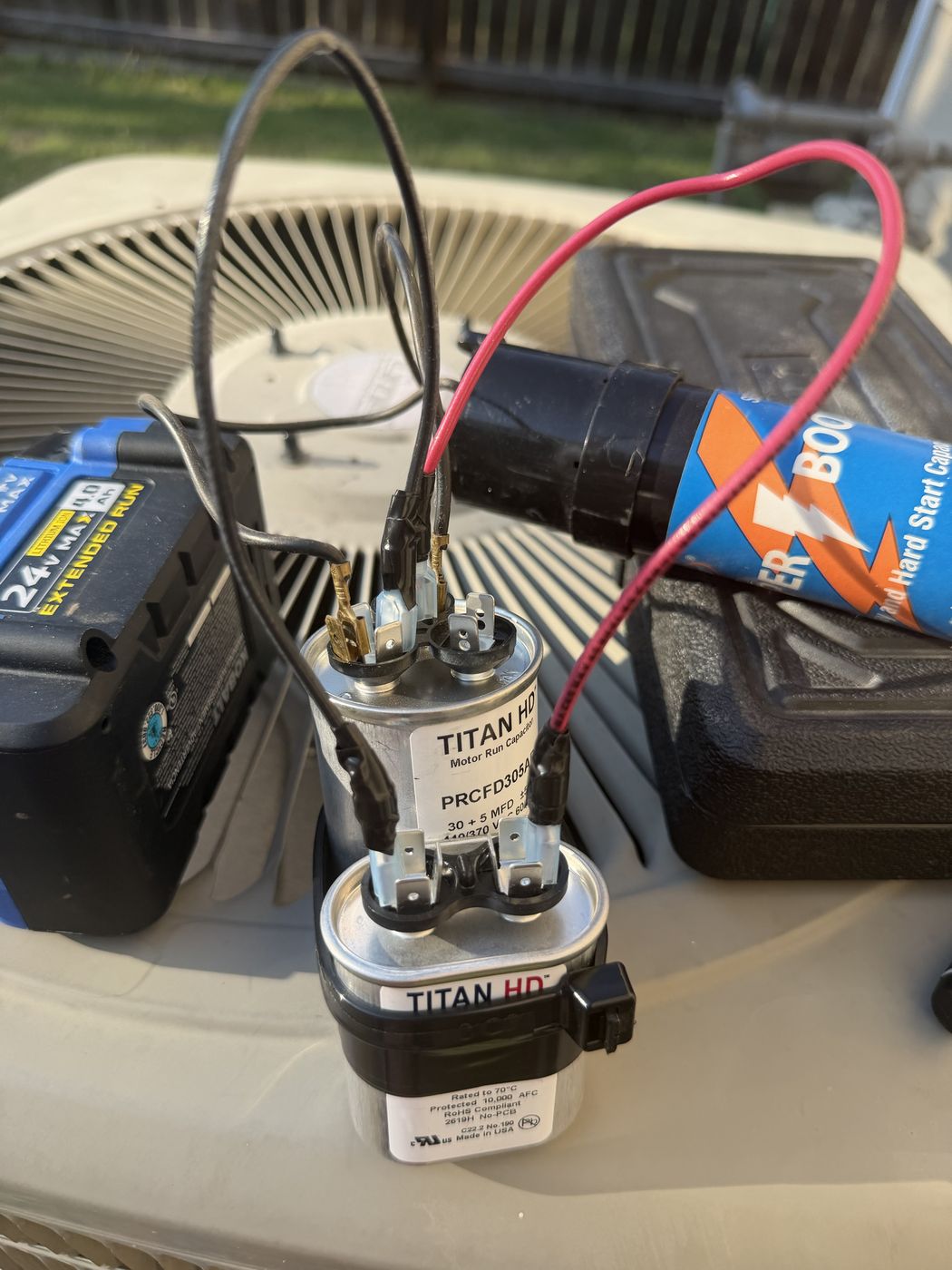
I had an employee cut me two feet off the roll because I could not find short pieces. One color would have worked fine, I just wanted to be able to tell them apart.
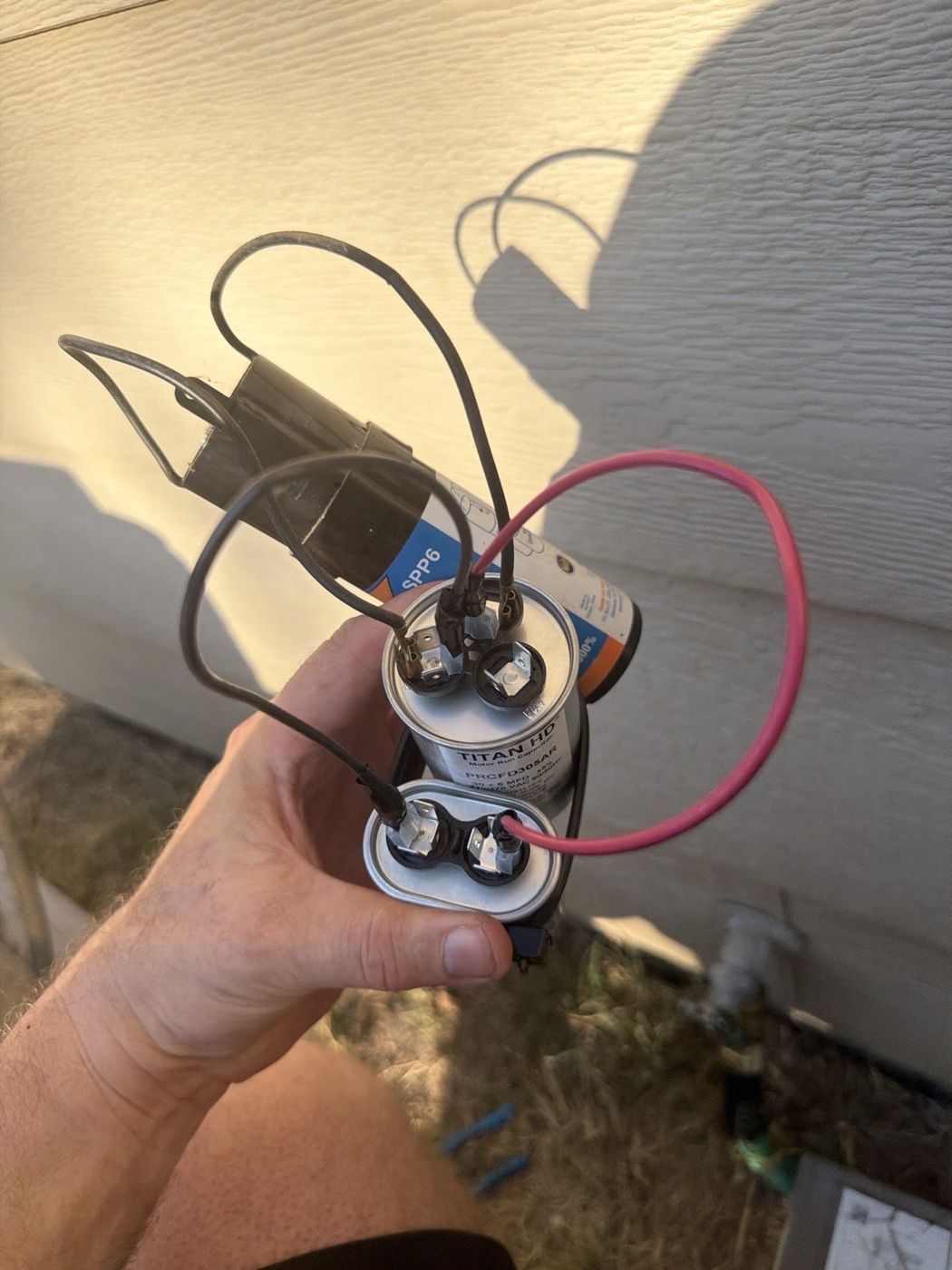
Nobody at the store helped me get to this. When I told the guy what I was going to do, he laughed at it. Said it sounded sketchy, that it probably would not work, and that if I wanted it to run for maybe ten minutes then sure, go ahead and try it. He was not being cruel. He just did not know.
Do not let that stop you. A guy behind a counter shrugging at your idea is not evidence that your idea is wrong. Go look it up. I did, before I wired anything, and I found working HVAC techs who do exactly this in the field when the right size is not on the truck, plus published reference material on it. It is not a hack and it is not rare. Two capacitors in parallel add up. That is the whole thing.
And that is the part that gets me. Five people before me stood at that same shelf, and he could have sent every one of them home with cold air. Instead they all left with nothing.
One more thing, since everybody asks about AI now
AI did not hand me this. I thought of it standing in the aisle, and then I asked whether it would work. That is a different thing, and I think it is the more useful thing.
The value was not in getting an answer handed over. It was in being curious enough to ask the question in the first place, and then going and finding real sources that backed it up before I put a wrench on anything. Stay curious, ask the question, then go verify it. That order matters.
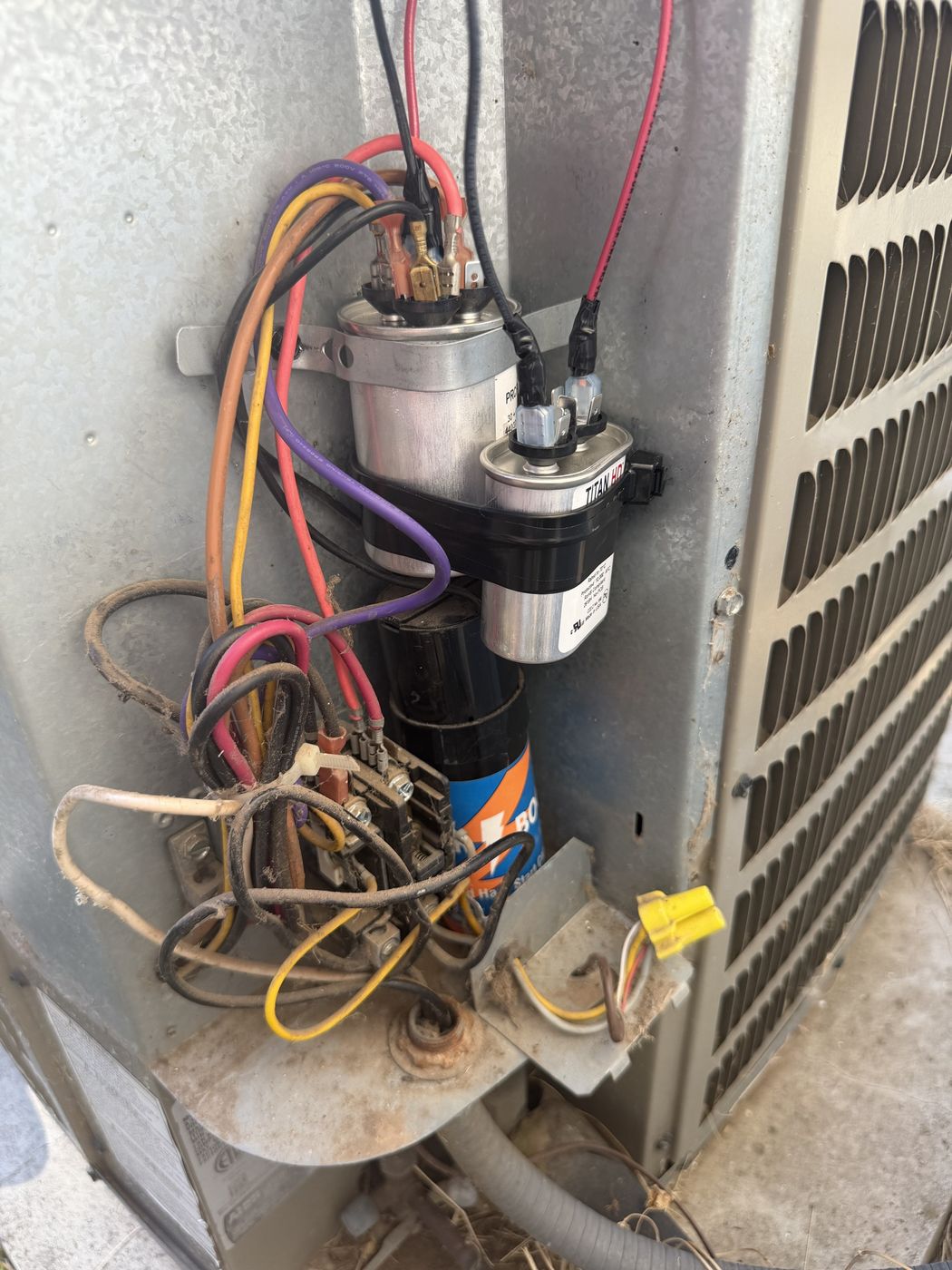
Two capacitors, wire, connectors and tape came to about $55.
If your unit is humming but the fan is not turning
That is the classic dead capacitor. Here is the short version.
- Kill the power at the breaker inside, then pull the disconnect at the unit. Treat the capacitor as live until it is discharged.
- Pull the panel and photograph everything before a single wire comes off.
- Read the numbers off the can. You need the two MFD ratings and the voltage, for example 40 + 5 MFD at 440 VAC.
- Go buy that exact part. Show the counter your photo of the label.
- If your size is sold out, remember the shelf may still have it in two pieces. Capacitors in parallel add up, so a 30 + 5 with a 10 MFD jumpered from HERM to C gives you 40 + 5.
Been through this yourself?
If this saved you a service call, or if you have a trick of your own, say so. Somebody standing in front of an empty shelf in August will read it.